
How much money does your school have?
And how to get $100k of school money to spend on whatever you want.
Look up your district’s budget
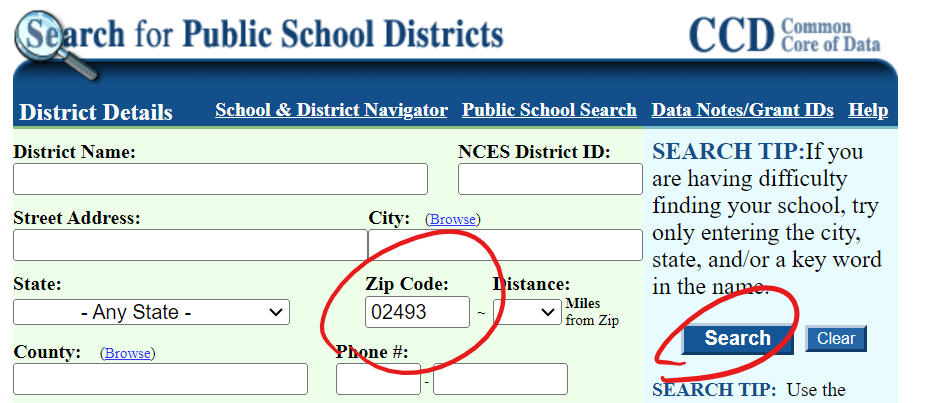
Look up your school district’s budget at nces.ed.gov/ccd/districtsearch. One fast way is to enter your school’s zip code and hit search.
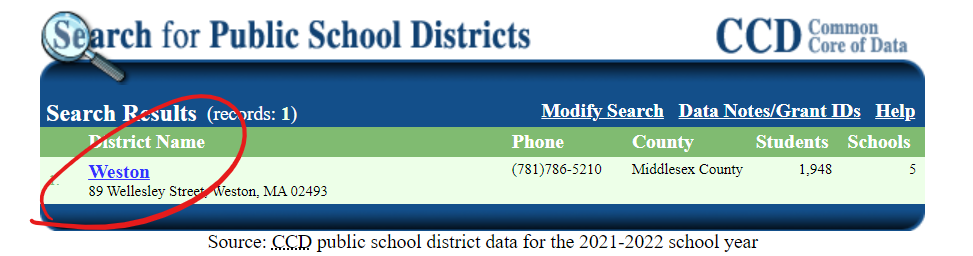
Click on the school district name in blue.
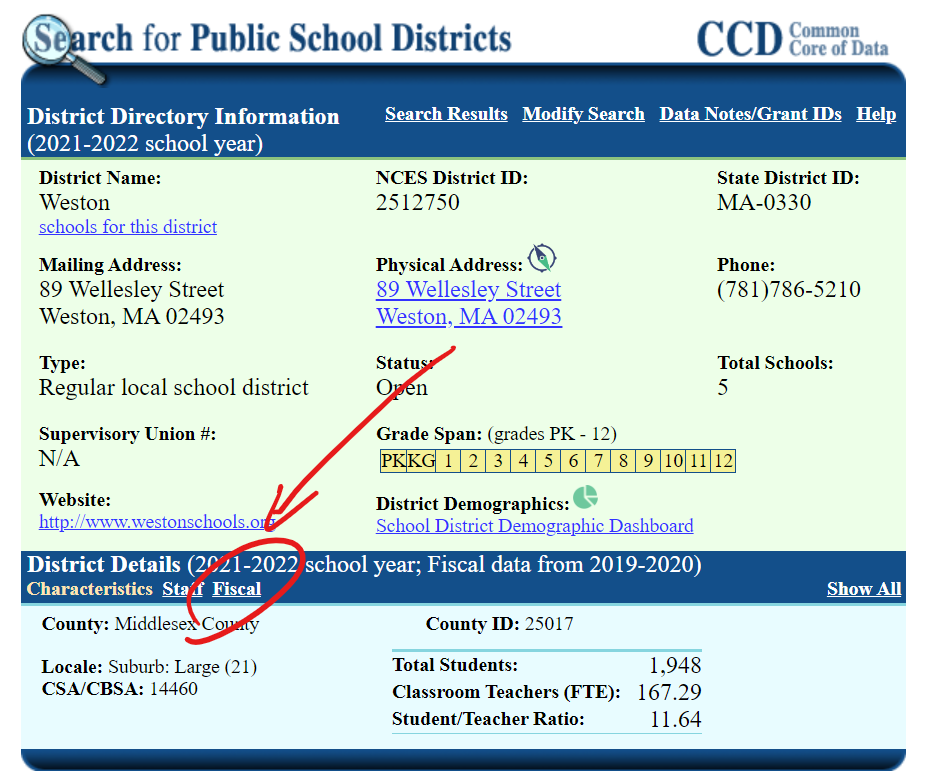
Click the tiny “Fiscal” button.
Now you can see how much your school district spends per student. This will also tell you who has power in your district. If the funding is mostly local, parents and locals (the taxpayers) are the most powerful forces in your district.
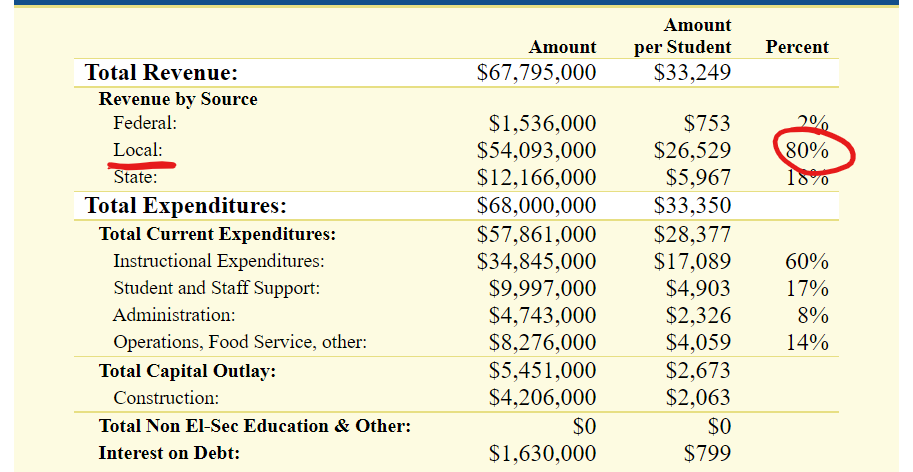
Local funding is 80% of this district’s revenue. Even if funding wasn’t all local, the school board would still be powerful, because it controls the way the money is allocated. In larger districts (like NYC), you may have to Google “[school district name] funding per student.”
Find your school’s budget
NCES stops at the district. To get from there to your building, you need to know how the money moves: the district office takes the big pot and splits it among schools. Some districts give each school a dollar amount by formula (New York City’s main one is called Fair Student Funding) and let the principal decide how to spend it. Others hand each school a set number of teachers plus a small pot for supplies, and keep everything else at the central office.
Either way, the numbers are public. Places to look:
- Your state’s school report card. Federal law makes every state publish per-student spending for every school, split into federal, state and local money (20 U.S.C. § 6311(h)). Google “[your state] school report card” and search for your school.
- Your district’s budget book. Google “[district name] adopted budget pdf.” Big districts often break spending down by school; smaller ones break it down by department (athletics, technology, curriculum).
- Your school’s own spending plan. In some states, schools write one with a council. In California, for example, a high school that has a School Site Council has to put students on it, and that council writes the plan for how the school spends its state and federal program money.
- NYC: Galaxy Budget Summaries show every school’s budget, line by line. Type in the last four characters of your school’s code (Midwood High School is 22K405, so K405).
- Nothing online? Ask your principal or a school board member for your school’s budget. It’s a public record, so if they won’t share it you can file a public records request.
DONE DEALS vs. OPEN FIELDS
Once you have a budget, split it into DONE DEALS—costs the school is always going to pay, like teacher salaries and the heating bill—and OPEN FIELDS—money a principal or school board could actually decide to spend differently next year.
Most of any school budget is DONE DEALS. Nationally, about 80% of public school spending goes to salaries and benefits (NCES). Nobody is laying off the chemistry teacher to pay for your idea.
The rest is what NYC calls OTPS (“Other Than Personal Services”): everything except salaries. That’s where most OPEN FIELDS live. Here’s the OTPS section of Midwood High School’s 2025–26 budget in Brooklyn. The whole school budget is $40.4 million; OTPS is about $3.1 million of it.
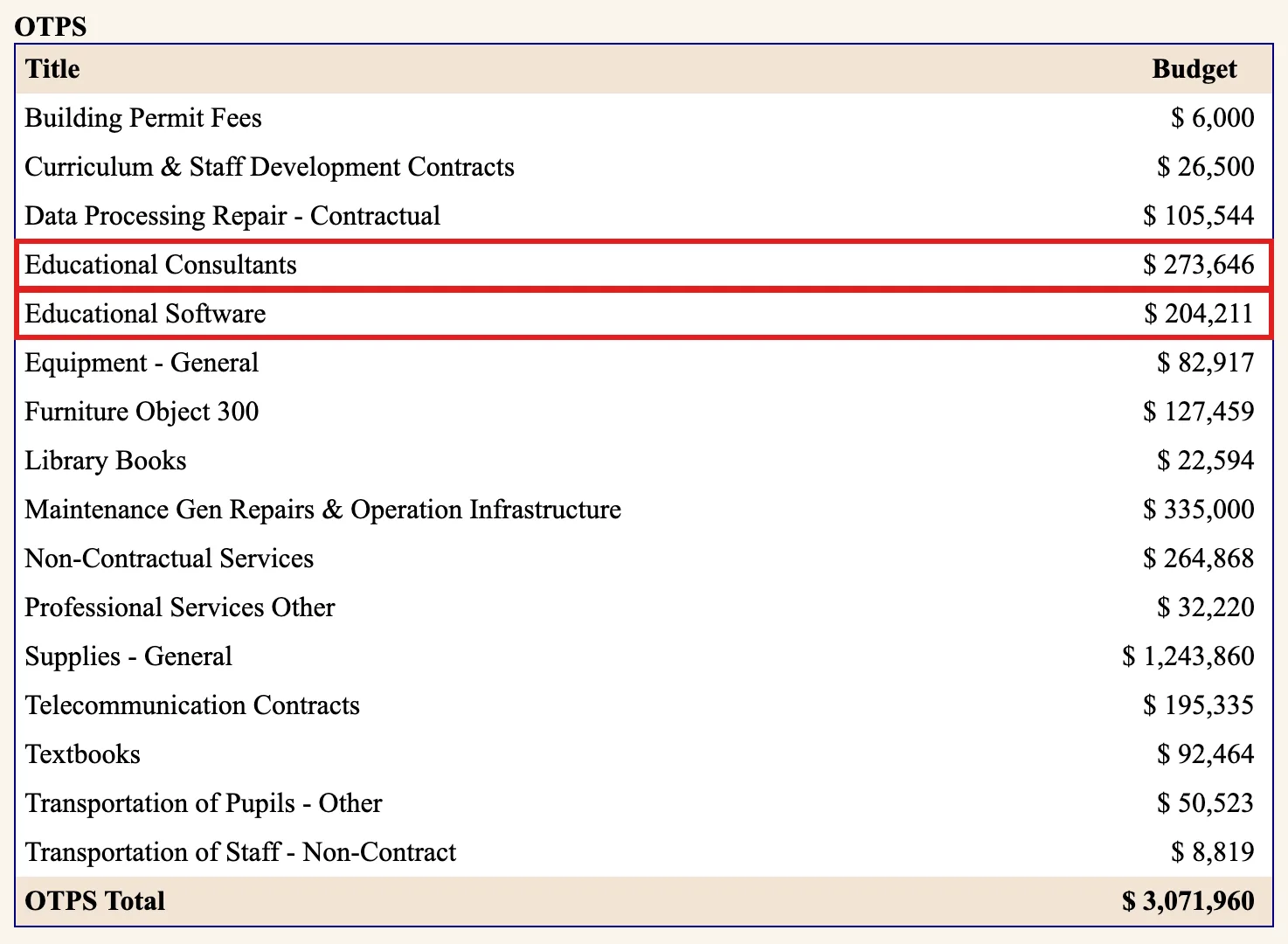
Some of this is still a done deal. The phone contract and building repairs aren’t going anywhere. But two lines are each worth more than $100k, and both are decisions somebody made on purpose:
- Educational Consultants, $273,646. Outside people paid to train teachers or run programs. Ask who they are and what students got out of it.
- Educational Software, $204,211. Licenses for apps and websites. You are the expert here: you know which ones anybody opens. A 2019 analysis of 275 schools by the edtech analytics company Glimpse K12 found that, on average, two-thirds of the software licenses schools bought went unused. If Midwood’s logins went unused at that rate, over $100,000 of that one line would be paying for accounts nobody touches.
One more line, outside OTPS: Midwood budgets $978,847 for after- and before-school student programs. That’s teachers getting paid extra to run clubs, teams and tutoring. If you want a new club, that’s the line to ask about.
Don’t go after the whole OTPS total. Pick one line and one specific thing in it: one software contract, one consultant, one program.
Warning: restricted vs. flexible money
Before you pitch, find out which pot a line is paid from. Some money can go to almost anything that helps students. Some is locked to one purpose by law, and no amount of great ideas will unlock it.
- Textbook money in New York (NYSTL, the New York State Textbook Law) can only buy textbooks, software, library books and certain classroom hardware (NYC Charter School Center). You could move it from paper books to e-books. You can’t move it to a field trip.
- Title I money (federal, for high-poverty schools) and special education money (IDEA) come with their own rules about who they serve and what they can buy.
- Most federal money has a “supplement, not supplant” rule: it has to add something new, not pay for what the school already covers.
In NYC, Galaxy Allocations shows which funding sources add up to each school’s budget. Everywhere else, ask the business office two questions: “What funding source pays for this line?” and “What is that source allowed to buy?”
The $100k with your name on it: Title IV-A
There’s one pot of money that’s flexible on purpose, and that your district is legally supposed to ask students about. It’s a federal grant called Title IV, Part A (officially “Student Support and Academic Enrichment”). Nearly every district that gets Title I money also gets Title IV-A, at least $10,000 each.
Here’s what some New York districts are getting for 2026–27:
| District | Title IV-A, 2026–27 |
|---|---|
| White Plains | $115,385 |
| New Rochelle | $179,491 |
| Albany | $421,726 |
| Schenectady | $518,627 |
| Yonkers | $982,613 |
| New York City | $62,101,678 |
Source: NYSED, 2026–27 preliminary Title IV, Part A allocations
That’s your $100k: White Plains, a district of about 7,000 students, gets more than $100,000 a year of it. To find your district’s number, Google “[your state] Title IV Part A allocations” plus the school year. Congress sets the total every year and it’s been a target for cuts, so make sure you’re looking at the current year.
The rules for this money
From the law (20 U.S.C. § 7116). If your district gets $30,000 or more, it must spend:
- At least 20% on a “well-rounded education”: music and arts, STEM, college and career counseling, AP/IB exam fees for low-income students, civics, foreign languages, environmental education (full list).
- At least 20% on “safe and healthy students”: mental health services, mentoring and counseling, bullying and dating-violence prevention, drug prevention, physical education (full list).
- Some on technology for learning, with a cap on how much goes to devices and hardware.
It has to supplement, not supplant: it pays for something new, not something the district was already paying for. And when the district plans how to spend it, the law says it shall consult with parents, teachers, principals, students and community groups.
Most districts don’t. A 2026 federal evaluation looked at how districts spent this money in 2021–22. Only 40% consulted students. About half of districts with $30,000+ grants didn’t meet the spending minimums. A third moved some of their Title IV-A money into other federal programs, and about a quarter pushed spending into the next year.
The $100k playbook
- Find your district’s number and who controls it.
- Find out what it’s paying for now, and when next year’s plan is due.
- COLLECT DATA from students.
- Build a proposal that fits the rules.
- Get people on your team.
- Pitch it.
These steps work for any flexible line you found above, like a software contract at your school. The Title IV-A version is below.
1. Find the number and the person
Get your district’s allocation from your state’s list. Then find who runs it: usually a federal programs director or “Title programs coordinator” at the district office. Check the district website under “Federal Programs” or “ESSA,” or ask your principal.
2. Find out what it pays for now
Ask that person for the district’s current Title IV-A budget and when the next plan is due. Each district applies to its state for this money every year, often in spring or summer for the next school year, so timing matters. If they won’t share, the budget is a public record: file a request.
Look for things students could judge better than adults can: software nobody uses, a one-day assembly that ate a big chunk, a program nobody’s heard of.
3. Collect data
Survey at least 20 students (more is better; a quick Google Form works). Districts that get $30,000 or more have to do a “needs assessment” before they spend this money. Your survey is exactly that, done for free. Get a juicy quote from a friend, too.
What should our school spend $100k on?
1. What grade are you in?
2. Which school apps or websites did you actually use in the last two weeks? (List every one the school pays for.)
3. Which of these would help you most? (Mental health support / College and career help / Music and arts / STEM, robotics or coding / Help paying for AP or IB exams / Something else)
4. What’s one specific program or thing that would make school better for you?
5. If it existed, would you use it? (Every week / Sometimes / Probably not)
4. Build a proposal that fits the rules
Pick one idea from your survey and check it against the lists above. Then put a price on it. A few that fit:
- Covering AP or IB exam fees for low-income students (well-rounded education)
- A robotics team or after-school coding program (well-rounded education)
- More hours from a counselor or a mental health partner (safe and healthy students)
- A peer mentoring program for freshmen (safe and healthy students)
Make sure it’s new. If the district already pays for it with local money, Title IV-A can’t take over the bill.
5. Get people
Find the adult who would actually run your idea (a teacher, a coach, a counselor) and get them on board first. If it touches classes, talk to whoever runs curriculum—often an assistant principal or the district. Then get your principal, student government, and a few parents to say they support it. A proposal with a named adult attached is much easier to say yes to.
6. Pitch it
Email the federal programs director. Here’s a template.
Subject: Student input on [District]’s Title IV-A plan
Hi [Mr./Ms./Dr.] [Lastname],
I’m a [grade] student at [school]. Our district gets about $[amount] a year in Title IV-A funding, and the law asks districts to consult students when they plan how to spend it. I’d like to help.
I surveyed [number] students at [school]. [Top finding, e.g. “62% said college and career help would help them most.”]
I’d like to propose using $[cost] of next year’s Title IV-A funds for [your idea]. It fits under [well-rounded education / safe and healthy students], and it would [who it helps and how]. [Teacher or counselor name] has agreed to [run it / support it].
Could I meet with you for 15 minutes before next year’s plan is finalized? I’m happy to share the full survey results.
Thank you,
[Your name]
Be ready to compromise: they may fund half of it this year, or fold it into something they already planned. Take it.
No reply in two weeks? Email again and copy your principal. Still nothing? Sign up for public comment at the next school board meeting and read your survey results out loud.